

There are homes in Los Angeles that stop people mid-scroll. Not because of a dramatic renovation or a rooftop deck, but because of something harder to manufacture — a sense that the house actually belongs where it sits. Spanish Revival homes do that consistently, and it's a big part of why they keep drawing serious buyer interest in a city full of options.
For anyone relocating to LA and comparing what's available here against newer construction elsewhere, the contrast becomes clear pretty quickly. A freshly built home might offer modern finishes and open floor plans, but it rarely offers the kind of architectural identity that Spanish Revival properties carry. These homes feel like they were designed for Los Angeles specifically, not adapted from a national builder's catalog.
That combination of emotional pull and practical market value is exactly what makes this style worth understanding before you start your search. Knowing what to look for, which neighborhoods concentrate the best examples, and how scarcity affects pricing will help you make smarter decisions when you find a property you love.
They Offer Something Buyers Struggle to Find Anywhere Else
Spanish Revival homes bring together timeless design, neighborhood identity, and genuine scarcity in a way that newer construction rarely matches. Buyers aren't just paying for square footage when they pursue these properties. They're paying for architectural authenticity and a home that feels distinctly rooted in Los Angeles.
That willingness to pay shows up in the numbers. Median listing prices in Northeast LA hover around the $1.2 million range, and well-positioned homes in neighborhoods like Eagle Rock regularly sell quickly and at strong price points. That's not just admiration for a pretty style — it reflects real, sustained demand from buyers who recognize lasting value when they see it.
Part of what drives that demand is how difficult these homes are to replace. The craftsmanship behind original Spanish Revival construction — the hand-laid tilework, the custom ironwork, the thick stucco walls — isn't something a developer can efficiently reproduce at scale today. When an intact example hits the market, buyers notice, and competition tends to follow.
There's also something worth considering about how these homes perform at resale. Distinctive properties stand out more in a crowded market. A home with original architectural character gives future buyers something to connect with emotionally, which tends to support stronger offers and shorter time on market. Generic homes don't always have that advantage.
Preserved neighborhood context adds another layer of value. Buyers aren't only evaluating the house itself — they're looking at the surrounding streetscape, the architectural consistency of the block, and whether the area has the kind of identity that holds up over time. Spanish Revival homes that sit within well-maintained historic neighborhoods benefit from all of that, making them a strong long-term bet for buyers who are thinking beyond the immediate purchase.
The Features That Make People Fall in Love Fast
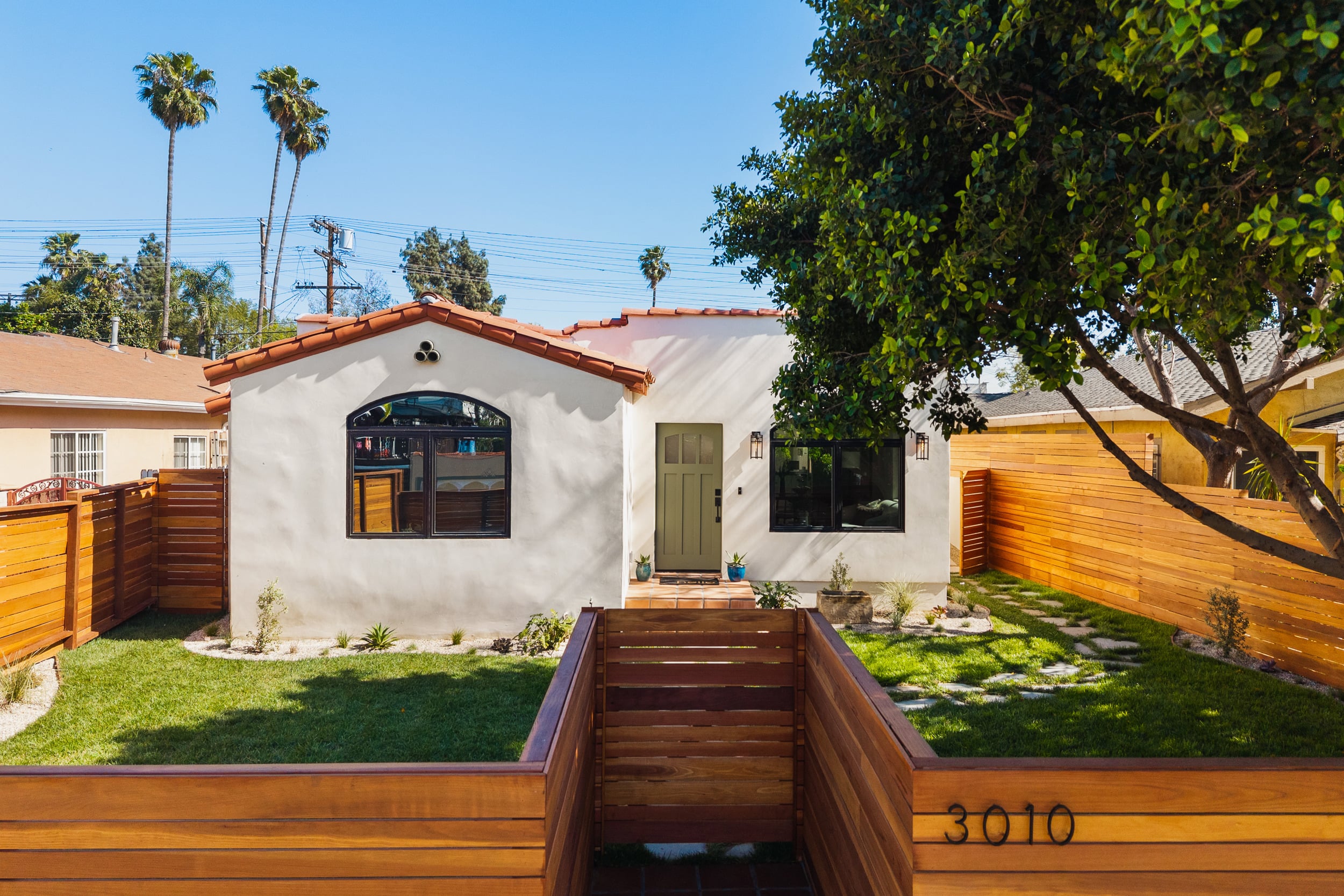
The first thing most buyers notice in listing photos is the red clay tile roof. It's immediately recognizable and sets the tone for everything else the home offers. From there, the details compound — stucco exteriors, arched doorways, wrought-iron hardware, exposed wood beams, decorative tilework, and courtyard layouts that bring the outdoors in without sacrificing privacy.
These features aren't just visually appealing. Each one serves a real function in daily life. Courtyards create a natural buffer between the street and the interior, giving residents a quiet outdoor space that feels more like an extension of the home than a yard. Arched doorways soften the transition between rooms, making interiors feel less rigid and more welcoming. Hand-painted tile and exposed beams add visible craftsmanship that generic remodels simply can't replicate.
Knowing how to tell authentic details from later additions is useful when you're evaluating listings. A few things worth looking for:
- Original red clay tiles that show age-appropriate wear and fit the roofline naturally, rather than newer tiles added to mimic the look
- Wood windows with true divided lights, as opposed to vinyl replacements with decorative grilles
- Wrought-iron details that are hand-forged rather than mass-produced, which you can usually tell by slight irregularities in the metalwork
- Tilework that appears in structurally integrated locations like entryways, stair risers, and fireplace surrounds rather than only in cosmetic spots
Homes that have been updated over the decades sometimes blend original features with decorative additions meant to enhance the Spanish Revival aesthetic. That's not necessarily a problem, but it's worth knowing what came with the house and what was added later. An experienced local agent or a licensed inspector familiar with historic properties can help you sort that out before you make an offer.
What makes these homes memorable beyond the individual features is how everything works together. The warm tones of the stucco, the texture of the tile, the weight of the ironwork — it creates an interior environment that feels cohesive rather than assembled. That's a quality that's genuinely hard to recreate in a newer build, and it's one of the main reasons buyers who fall for this style tend to stay committed to it throughout their search.
Why This Style Fits Los Angeles So Naturally
Spanish Colonial Revival architecture took hold in Los Angeles during the 1920s and 1930s, a period of rapid growth when the city was actively building its identity. Architects and developers at the time drew from California's Spanish and Mexican heritage, and the style spread quickly across residential neighborhoods throughout the region.
What helped it stick wasn't just cultural resonance — it was climate compatibility. Preservation experts have noted that Spanish Revival design responds particularly well to Southern California's environment. Thick stucco walls regulate interior temperatures naturally. Low-pitched tile roofs shed the occasional heavy rain without the need for steep pitches designed for snowfall. Shaded outdoor areas and courtyard layouts make the most of mild weather without requiring air conditioning to stay comfortable.
These aren't coincidental benefits. The style was shaped in part by the conditions of the region, which is why it feels native to Los Angeles rather than imported from somewhere else. A Victorian home transplanted to an LA hillside can feel slightly out of place. A Spanish Revival home on the same hillside feels like it grew there.
That sense of belonging extends to how these homes interact with their surroundings. The warm exterior tones complement the dry California landscape. The courtyard walls create privacy without the visual weight of a tall fence. The low rooflines sit comfortably against the horizon rather than competing with it. All of that contributes to why the style has remained relevant across multiple generations of LA homebuyers, even as architectural trends have shifted significantly around it.
For buyers relocating from other parts of the country, this context matters. You're not just choosing a house — you're choosing a way of living in a specific place. Spanish Revival homes were designed with Southern California in mind from the start, and that alignment between the architecture and the environment is part of what makes them feel so right once you're actually living in one.
Why Scarcity Helps These Homes Hold Value
Only so many intact Spanish Revival homes exist in Los Angeles, and that number isn't growing. New construction doesn't add to the supply of originals, and every renovation that strips out authentic details quietly reduces the pool of truly preserved examples. That scarcity has a direct effect on how these homes perform in the market.
Highland Park and Garvanza offer one of the clearest illustrations of how preservation supports long-term value. The Highland Park-Garvanza Historic Preservation Overlay Zone is the largest HPOZ in Los Angeles, covering approximately 4,000 structures. That designation helps maintain the architectural consistency of the area, which in turn gives buyers confidence that the neighborhood's character won't be diluted by incompatible new development.
Buyers in this category are often drawn to more than the house itself. The surrounding streetscape, the rhythm of the block, and the visual coherence of the neighborhood all factor into how a property feels — and how it holds its value over time. A Spanish Revival home surrounded by similar architecture reads differently than the same house sitting next to a stucco-clad apartment complex. Context matters, and preserved neighborhoods provide it.
At resale, distinctive homes tend to attract a wider range of motivated buyers. Someone searching specifically for Spanish Revival character isn't going to find many alternatives, which creates a competitive dynamic that benefits sellers. That's a meaningful advantage compared to more generic properties that compete primarily on price and square footage.
The emotional dimension of these homes also plays a role in their market resilience. Buyers who connect with the style tend to be committed, which reduces the kind of hesitation that can slow down a transaction. When a well-preserved Spanish Revival home with original details comes to market in a strong neighborhood, it tends to move — and at prices that reflect how rare the combination really is.
Where To Find Standout Spanish Revival Homes in Northeast LA
Northeast LA has some of the strongest concentrations of Spanish Revival architecture in the city, and each neighborhood brings something slightly different to the table.
Highland Park and Garvanza are the most historically significant areas for this style. The Highland Park-Garvanza HPOZ covers a large portion of both communities, and the streetscapes here reflect what the neighborhood looked like during the height of the Spanish Revival period. Buyers who want preserved architectural context and a strong sense of neighborhood identity tend to gravitate here.
Eagle Rock has become one of the more competitive markets in Northeast LA, with strong pricing and consistent buyer demand. The neighborhood has a family-friendly feel and a mix of well-maintained Spanish Revival homes alongside other character properties. Homes here tend to move relatively quickly, so buyers need to be prepared to act when something good comes up.
Mount Washington offers a higher-end version of character living, with hillside homes, canyon views, and a quieter residential atmosphere. Spanish Revival homes here often come with more land and stronger privacy, which appeals to buyers looking for something a bit more removed from street-level activity.
Glassell Park sits at an interesting point in the market right now. Inventory moves fast, and buyers looking for Spanish Revival character at a relatively better price point compared to Eagle Rock or Mount Washington are paying close attention to this neighborhood. The architectural stock is solid, and the area has been drawing increased interest from buyers who want character without the premium pricing of more established neighborhoods.
Los Feliz extends the style into some of LA's most iconic residential streets. Homes here tend to come at higher price points, but the architectural quality and neighborhood prestige make it a reference point for what Spanish Revival living can look like at its most refined.
What Relocating Buyers Should Look For Before They Buy
Authentic details are the first thing worth evaluating in any Spanish Revival home. Original red clay roof tiles, intact wood windows, hand-forged wrought iron, and preserved decorative tilework are all signs that the home has been maintained with care rather than updated for convenience. These features are what give the property its character and long-term appeal, so losing them to a renovation — even a well-intentioned one — affects more than just the aesthetics.
Beyond the visible details, the mechanical condition of the home deserves serious attention. Older homes in this category can carry aging infrastructure that doesn't always show up in a walkthrough. Plumbing, electrical systems, HVAC, drainage, and foundation condition are all worth a thorough inspection before you commit. A home that looks beautifully preserved on the surface can still have deferred maintenance underneath, and the cost of addressing those issues adds up quickly.
Buyers purchasing in designated historic preservation areas should also understand what that means for future renovations. Homes within an HPOZ like Highland Park-Garvanza are subject to guidelines that govern exterior changes, which can affect everything from window replacements to additions. Those guidelines exist to protect the neighborhood's character, and for most buyers in this category, that's actually a benefit — it means your neighbors can't make changes that undermine the architectural consistency of the block. That said, it's worth knowing the rules before you buy so there are no surprises when you want to make changes of your own.
A beautifully styled listing doesn't always reflect original architectural integrity. Some homes have been updated with Spanish Revival-inspired details — arched doorways added during a remodel, decorative tile installed in a kitchen renovation — that create the aesthetic without the underlying authenticity. Working with an agent who knows the difference, or bringing in a preservation consultant for a pre-offer evaluation, can help you understand exactly what you're getting. Paying for authentic character makes sense. Paying a premium for a convincing imitation is a different calculation altogether.
Conclusion
Spanish Revival homes remain some of the most sought-after properties in Los Angeles because they bring together beauty, livability, local history, and genuine scarcity in a single package. Buyers aren't just drawn to how these homes look — they're drawn to how they feel, and to the sense of place they carry that newer construction rarely replicates.
Neighborhoods like Highland Park, Garvanza, Eagle Rock, Mount Washington, and Glassell Park are where that feeling is most concentrated in Northeast LA. Each area has its own character, price point, and buyer dynamic, but all of them offer strong examples of why this architectural style has held up so well across generations.
For anyone relocating to Los Angeles and weighing their options, understanding what makes Spanish Revival homes valuable — and what to look for when evaluating one — makes the search more focused and the decision easier to feel confident about. These homes reward buyers who take the time to understand them, and in a competitive market, that knowledge genuinely makes a difference.
Check out this article next