

Listing photos and price points only tell you so much. When you're relocating to Los Angeles and trying to decide where to plant yourself, what you really need to know is what a neighborhood feels like on a regular Tuesday morning, not just during a well-staged open house. Atwater Village is one of those places that looks good on paper but feels even better in person, and that gap between the two is worth exploring before you make any decisions.
This guide is written for buyers who are still in the figuring-it-out phase. It starts with the questions that tend to matter most upfront, things like cost, competition, walkability, and whether the neighborhood actually fits the way you live, and then moves into the details that help you understand what daily life here really looks like.
Is Atwater Village Worth Considering for Your Move
Atwater Village tends to attract buyers who want a neighborhood that feels like a neighborhood. Local coffee shops with regulars, streets you can walk, a farmers market on the weekend, and a general sense that the area has its own identity rather than blending into the broader city. For buyers coming from places like Portland, Chicago, or Brooklyn, that quality is often the first thing they respond to when they visit.
This is not a neighborhood where you're going to find a deal relative to the rest of Los Angeles. Prices here reflect genuine demand from people who specifically want what Atwater Village offers, and that demand has stayed consistent. If your priority is maximizing square footage or finding a lower cost of entry into the LA market, there are other parts of the city that will serve you better.
What Atwater Village does well is give buyers a clear lifestyle in return for what they spend. The tradeoff is real but legible, which is actually reassuring when you're making a major financial decision in an unfamiliar city.
Buyers who tend to feel most at home here are people who want walkable access to local businesses, value a slower and more residential pace compared to neighborhoods like Silver Lake or Los Feliz, and are drawn to older architectural character rather than new construction. If you're someone who wants rooftop bars, a dense nightlife corridor, or a more urban energy, Atwater Village will probably feel too quiet.
On the other hand, if you're moving to Los Angeles and worried that the city will feel too sprawling and disconnected to ever feel like home, Atwater Village is one of the better arguments against that concern. Its scale is manageable. Its main commercial strip along Glendale Boulevard is short enough to walk end to end without planning around it. And the people who live here tend to stay, which gives the neighborhood a continuity that newer or more transient areas don't always have.
What Buying Here Looks Like Right Now
Median sale prices in Atwater Village sit around the mid $1.5 million range, with median listing prices running higher. That gap between list and sale price matters because it tells you something about how this market behaves. Homes here move quickly, often above asking, and inventory stays limited enough that buyers who aren't fully prepared can find themselves watching properties go before they've had time to think.
Atwater Village is consistently rated as a very competitive market. A high percentage of homes sell above list price, and sale-to-list ratios reflect how seriously buyers are competing for the properties that do come available. This is not a market where you can afford to spend two weeks deciding whether a home feels right.
Getting fully underwritten before you start touring is one of the most practical things you can do. Pre-qualification is not the same thing, and sellers in a market like this will notice the difference. Beyond financing, knowing your must-haves before you start looking helps you move with more confidence when the right property shows up, because hesitation here tends to be costly.
It also helps to understand what you're actually competing for. Atwater Village homes are often older, which means the pool of buyers includes people who are specifically drawn to architectural character and are willing to pay for it. You're not just competing on price in many cases, you're competing with buyers who have already done their research and know exactly what they want.
The limited inventory situation is worth taking seriously as you plan your timeline. If you're relocating with a fixed move-in date, building in extra time for your search is a smart move. Some buyers find the right home relatively quickly, but others spend several months watching the market before the right opportunity comes along. Going in with realistic expectations makes the process feel less stressful and keeps you from making reactive decisions under pressure.
What Daily Life Feels Like on the Ground
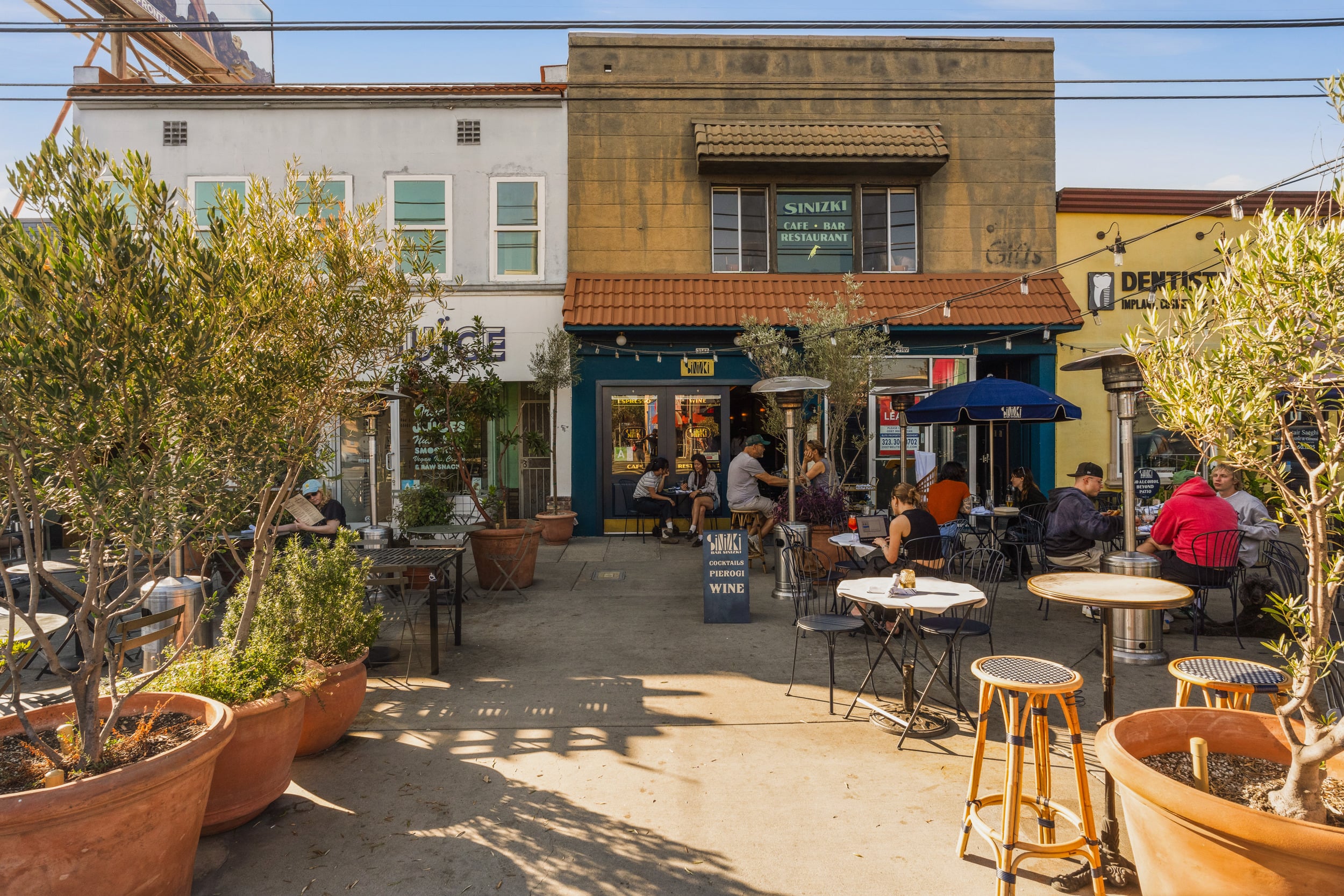
Atwater Village has a Walk Score of around 73, which puts it among the more walkable neighborhoods in Los Angeles. That number is anchored largely by the stretch of Glendale Boulevard that runs through the heart of the neighborhood, where coffee shops, restaurants, a grocery option, and local businesses are close enough together that you can handle several errands in a single outing without touching your car.
For buyers relocating from more walkable cities, this matters more than it might seem. Los Angeles has a reputation for being entirely car-dependent, and while that's true for many parts of the city, Atwater Village is one of the places where that reputation doesn't fully hold. You can walk to get coffee in the morning, grab dinner a few blocks away in the evening, and run basic errands on foot during the week. That kind of daily rhythm adds up over time and changes how a neighborhood feels to live in.
The layout of Atwater Village also works in its favor for people who are new to Los Angeles. The neighborhood is compact and easy to orient yourself in. There's a clear center, a recognizable residential grid surrounding it, and natural boundaries that make the area feel contained rather than sprawling. For someone still learning the city, that legibility is genuinely comforting. You don't need months of exploration before the neighborhood starts to feel familiar.
That sense of familiarity builds faster here than in many other LA neighborhoods, partly because of the scale and partly because the businesses and streets have a consistency to them. The same faces show up at the same coffee shops. The farmers market draws the same crowd each week. Over time, the neighborhood stops feeling like a place you moved to and starts feeling like somewhere you actually live.
Why People Get Attached to Atwater Village
The Atwater Village Farmers Market runs on Sunday mornings and functions as something more than a place to pick up produce. It's a weekly gathering point where neighbors run into each other, local vendors become familiar faces, and the rhythm of the week gets a reliable anchor. For buyers who want to feel connected to a place rather than just housed in it, that kind of recurring social ritual matters.
The neighborhood's independent businesses reinforce the same feeling. Atwater Village has largely resisted the chain-heavy commercial strips that define a lot of Los Angeles, and the result is a Glendale Boulevard corridor where the shops and restaurants have actual personalities. Regular customers become regulars in the truest sense, and that familiarity builds a kind of attachment to a place that's hard to manufacture.
Beyond the market and the businesses, Atwater Village has a visible civic life. Local organizations, neighborhood events, and community traditions give the area a connected atmosphere that you notice fairly quickly when you spend time here. This isn't a neighborhood where people move in and disappear behind their gates.
That said, Atwater Village is genuinely low-key. The energy here is residential and community-oriented rather than nightlife-driven or sceney. If you're coming from a city where you spent most evenings out and want that to continue, the neighborhood may feel underwhelming after a while. But if what you're after is a place where daily life feels grounded and the people around you feel like neighbors rather than strangers, Atwater Village tends to deliver on that consistently.
The Outdoor Side of Life Here
Griffith Park sits directly adjacent to Atwater Village, and for buyers who factor regular outdoor access into how they choose where to live, that proximity is one of the strongest arguments for the neighborhood. At over 4,700 acres, Griffith Park is one of the largest urban parks in the country, and it offers a range of trails, bike routes, and open space that can realistically become part of your weekly routine rather than a destination you visit a few times a year.
The LA River bike path adds another layer to this. The North Atwater access points connect riders and walkers to a dedicated path that runs along the river, making it possible to get a long outdoor workout without navigating traffic or driving to a trailhead. Dog owners, families with strollers, cyclists, and runners all use this corridor regularly, and it functions as both a recreational amenity and a social one.
What makes this combination particularly valuable is how rare it is in Los Angeles. Most neighborhoods that offer strong walkability and urban convenience are surrounded by other dense urban neighborhoods, with serious outdoor access requiring a drive. Atwater Village sits at a different kind of intersection, where the city and the open space meet at the edge of the neighborhood rather than miles away from it.
Spending a weekend morning on the trails above the Greek Theatre or riding the river path south toward Elysian Valley gives you a sense of how much this outdoor access shapes daily life here. It's not a selling point that sounds good in a listing description and then fades once you move in. Buyers who prioritize this kind of access tend to use it consistently, and the neighborhood's layout makes that easy.
The Homes You Will Actually Find
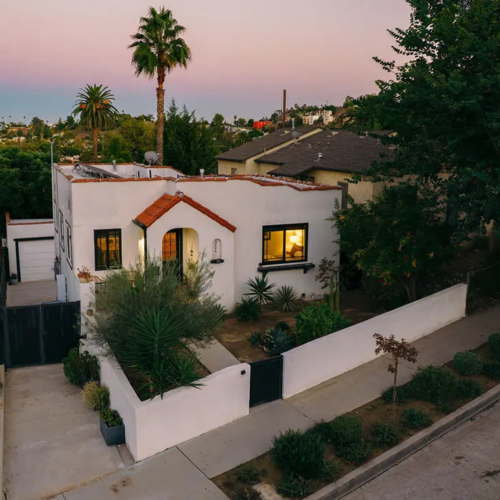
Spanish Revival and Traditional homes make up a significant portion of what comes to market in Atwater Village, with some Mid-Century influence showing up in certain pockets of the neighborhood. These are homes with genuine architectural character, the kind that buyers with an eye for design tend to respond to immediately, and that character is a big part of why people pay what they pay to be here.
Older homes come with tradeoffs worth understanding before you fall in love with a particular property. Smaller floor plans, older electrical or plumbing systems, and deferred maintenance are common in this part of Northeast LA. Some buyers are completely comfortable with that and factor renovation costs into their budget from the start. Others find that the charm of a 1930s Spanish bungalow loses some of its appeal once they get the inspection report.
Thinking clearly about how much updating you're willing to take on, and how much compromise feels acceptable, will save you from making a decision based purely on aesthetics. A well-maintained home in Atwater Village may cost more upfront but require far less in the first few years of ownership. A more affordable entry point might come with a renovation scope that ends up costing just as much in the long run.
Atwater Village also attracts buyers who care about architectural character as much as location, which means you're often competing with people who have done their research and have strong opinions about what they want. Going into the search with a realistic picture of what's available, and what condition it's likely to be in, puts you in a better position to evaluate each property on its own terms rather than reacting to it emotionally in the moment.
Where to Look If Inventory Feels Too Tight
When Atwater Village inventory is limited or competition feels too steep, the surrounding Northeast LA neighborhoods are worth touring with a clear sense of how each one differs rather than treating them as interchangeable alternatives.
- Eagle Rock tends to offer slightly more inventory and a somewhat lower price point than Atwater Village, with a commercial strip along Colorado Boulevard that has its own walkable character. The terrain is hillier, the streets are quieter in the residential sections, and the overall pace feels a bit more relaxed.
- Highland Park has gone through significant change over the past decade and now sits at an interesting intersection of longtime community character and newer restaurant and retail energy. Prices vary considerably by block, and buyers willing to do more research can sometimes find better value here than in more established pockets of Northeast LA.
- Silver Lake moves faster and feels denser, with a more active social scene and stronger foot traffic around the reservoir and Sunset Boulevard corridor. It tends to attract a slightly younger buyer pool and carries a higher energy level than Atwater Village on most days.
- Los Feliz sits just west of Atwater Village and offers larger lots, more established tree canopy, and a slightly quieter residential feel. Prices can run higher, but the neighborhood has a long-standing stability that appeals to buyers looking for somewhere to stay for the long term.
- Echo Park has been through a period of transition and offers some of the more varied price points in this part of the city, though the neighborhood's character is still settling in ways that make it worth visiting in person before deciding how you feel about it.
The right alternative depends on how you actually want to spend your time, not just on which neighborhood is closest to Atwater Village on a map. Touring each one at different times of day gives you a much more honest read on whether it fits your life than any amount of online research can.
Conclusion
Atwater Village works best for buyers who are willing to pay for a specific combination of things that are genuinely hard to find together in Los Angeles, walkable streets, a community-oriented atmosphere, architectural character, and immediate access to serious outdoor space. That combination has real value, and the market price reflects it.
For buyers relocating from cities where neighborhoods feel human-scaled and connected, Atwater Village offers something that much of Los Angeles doesn't, a place where daily life has a rhythm and the people around you feel like part of it. That's not a small thing when you're moving to a new city and trying to figure out where you belong.
Success here tends to come down to matching the neighborhood honestly to your real routines and your actual budget. Buyers who do that work ahead of time, who understand what they're getting into financially and what they're gaining in lifestyle, tend to feel settled here much faster than those who buy reactively. Knowing how Atwater Village actually feels before you make an offer is one of the most useful things you can do for yourself in this process.
Check out this article next